
Key Takeaways
- An introductory paragraph is most effective when it gradually introduces the topic before presenting the main argument.
- Providing sufficient context helps orient the reader without overwhelming them with excessive detail.
- As the paragraph develops, the focus should become increasingly specific.
- Concluding with a clear thesis statement clarifies the direction and purpose of the essay.
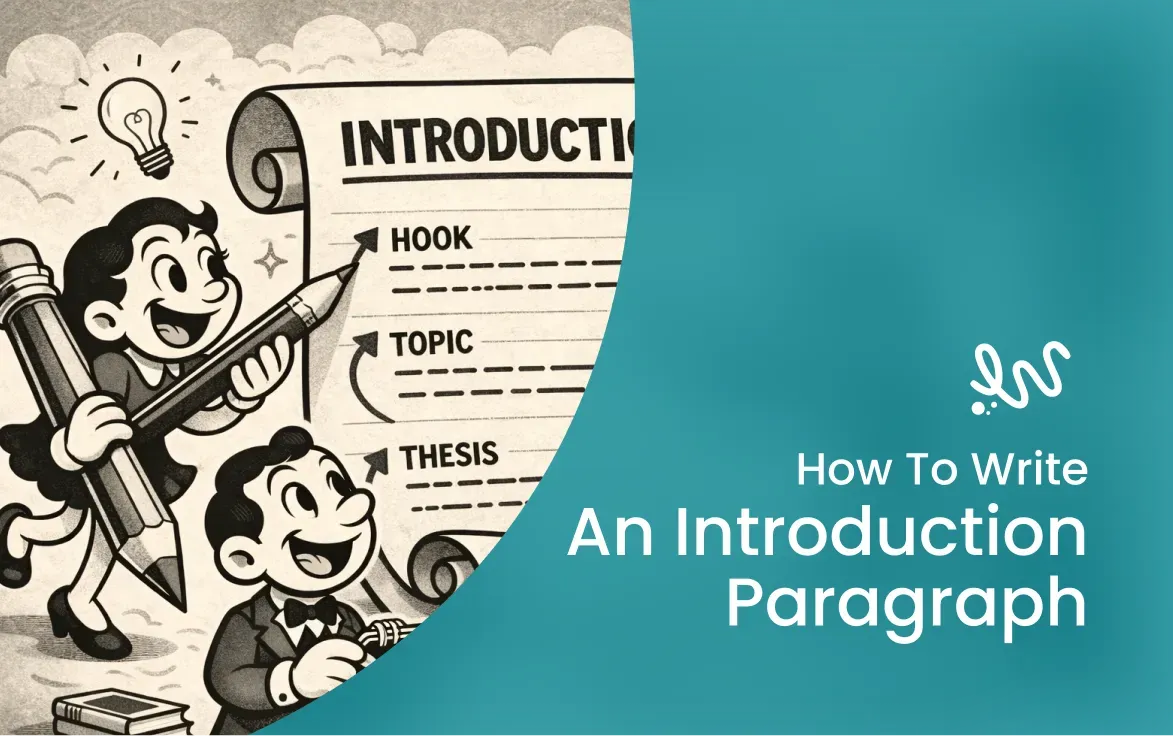
To write an introduction paragraph, begin with a clear opening sentence that introduces the topic, then add brief background information to explain the situation or context. After that, narrow the focus to the specific issue the paper will address and end the paragraph with a precise thesis statement that states the main claim.
If you need an example of introduction paragraph, WriteMyEssay offers support with writers who help shape clear, focused openings through our custom write my essay help.
Better Writing Starts With the Right Help

What Is an Introduction?
An introduction is the opening paragraph that presents the topic, provides essential context, and defines the main focus of the discussion. It helps the reader understand why the topic matters and signals what kind of argument or analysis will follow. A clear introduction also shapes the reader’s expectations by outlining the direction of the paper and preparing them for the ideas developed in the body paragraphs.
What to Include in an Introduction Paragraph?
A good introduction combines a few key elements that move the reader to a specific claim. It introduces the subject, provides brief context, narrows the focus, and explains the topic’s significance. Most introductions end with a clear thesis statement and, in longer papers, may briefly indicate how the essay is structured.
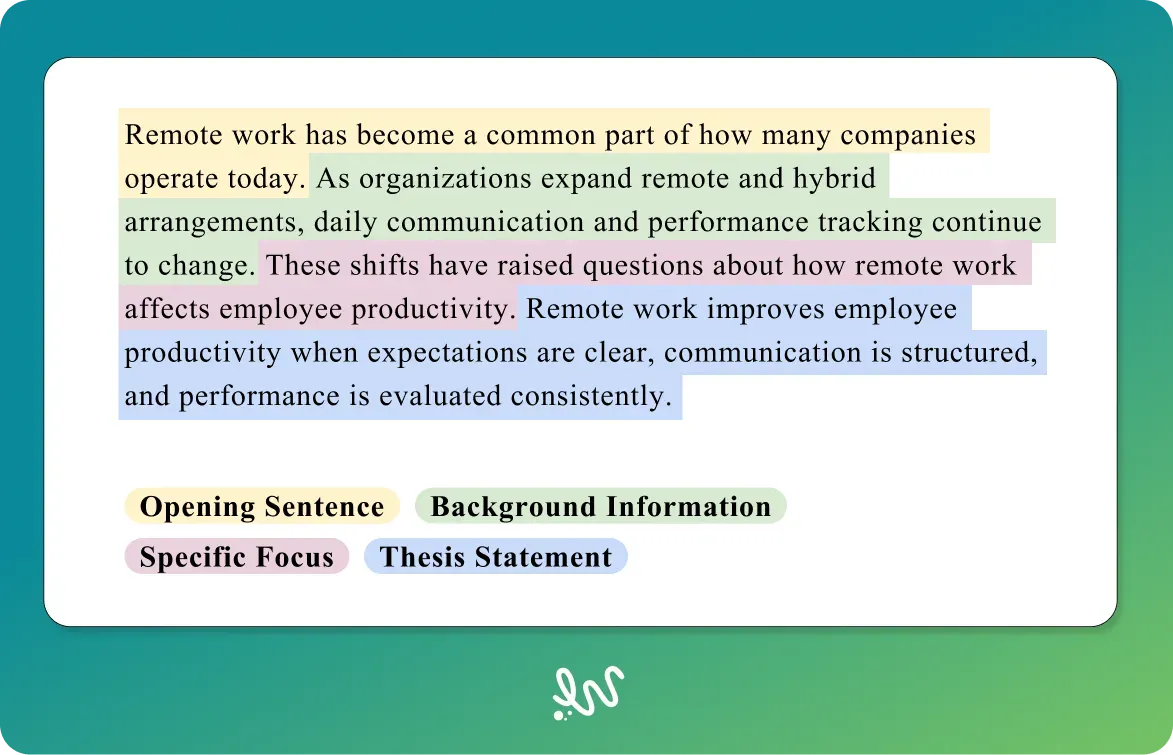
The parts below work together to form one coherent opening. To keep this concrete, all examples build a single introduction on the same topic: the impact of remote work on employee productivity.
Opening Sentence
The first part of the introduction paragraph format is an opening sentence that sets the tone and direction of the introductory paragraph. To write this part, begin with a broad but relevant idea that signals the general subject and draws the reader in without overstating the argument. The goal is to create momentum, not to prove a point yet.
Remote work has reshaped how organizations operate, changing daily routines, communication patterns, and expectations around productivity.
Shared Context
Shared context establishes information the reader can reasonably accept as common knowledge. When writing this section, briefly outline facts or widely accepted observations that frame the discussion and prepare the reader for a more focused claim.
As flexible work became more common worldwide, many companies across technology, education, and professional services moved toward hybrid or fully remote models.
Topic or Purpose
This part clarifies what the essay will focus on within the broader topic. To write it effectively, narrow the discussion and signal the specific issue the essay will examine.
This essay focuses on how remote work influences employee productivity rather than job satisfaction or workplace culture.
Motive
The motive explains why the topic deserves attention. It answers the reader’s silent question about significance. When writing this sentence, highlight tension, debate, or uncertainty related to the topic.
While some organizations report productivity gains under remote systems, others struggle with declining output and coordination, raising questions about when remote work actually works.
Thesis Statement
The thesis statement presents the central claim of the entire essay. It should be specific, arguable, and placed near the end of the introduction. To write a strong thesis, clearly state the main position the paper will support.
Remote work improves employee productivity when clear performance expectations, structured communication, and role-specific accountability systems are in place.
Roadmap (Optional)
A roadmap briefly previews how the essay will proceed. This element is most useful in longer or more complex papers. When included, it helps the reader anticipate the structure of the discussion.
The essay first examines productivity data from remote teams, then analyzes management practices, and concludes by identifying conditions that support effective remote work.
How to Write an Introduction Paragraph
The process of writing an introduction paragraph begins by presenting the topic in a straightforward way, then providing enough context for the reader to understand its relevance. From there, the focus narrows to a specific issue, explains why that issue matters, and concludes with a clear main claim.
Each step below builds on the previous one, using the same topic throughout: the impact of remote work on employee productivity.
Step 1: Write a Clear Opening Sentence
The opening sentence sets the starting point for the entire paragraph. Its purpose is to introduce the topic in a way that feels clear and grounded, without presenting an argument yet. At this stage, the reader needs orientation, not persuasion.
A strong opening sentence usually refers to a real situation, trend, or condition related to the topic. The sentence should be broad enough to introduce the subject, but specific enough that the topic is unmistakable. If it could fit almost any essay, it lacks direction. If it already states a conclusion, it belongs later.
Example: Remote work has become a common feature of modern workplaces.
Step 2: Give the Reader the Context They Need
This step explains the situation surrounding your topic so the reader understands why it exists and how it came to matter. Context can come from common knowledge, recent changes, or widely accepted facts related to the topic. The key is relevance. Every sentence here should help the reader see the issue more clearly, not overload them with history or detail. Think of it as answering the quiet question in the reader’s mind: What’s going on here?
Example: As remote work expanded across industries in recent years, many organizations adjusted communication systems, performance tracking, and team coordination practices, changing how productivity is measured and managed.
Step 3: Narrow the Topic
Most topics are too large to handle all at once. The introduction should subtly signal which aspect of the topic is relevant here. That shift helps the reader stop scanning and start paying attention, because the essay finally feels specific.
This usually happens in one sentence that turns the conversation. You transition from describing a situation to highlighting a specific issue within it.
Example: This essay examines how remote work affects employee productivity, rather than its impact on workplace culture or job satisfaction.
Step 4: Show the Topic’s Importance
At this stage, the reader understands what the essay focuses on, but interest still needs a reason to grow. This step explains why the issue is worth examining instead of remaining a neutral description. It answers the question of relevance.
You do this by pointing to uncertainty, disagreement, or real consequences tied to the topic. Something does not line up neatly, and that gap creates space for analysis.
Example: Although some organizations report higher productivity under remote work models, others experience coordination issues and slower output, suggesting that the impact of remote work is more complex than it first appears.
Step 5: State the Main Claim
Up to this point, you’ve been setting the stage. Now you tell the reader what the essay actually stands for.
The main claim is a clear statement of what you believe is true based on the discussion you’re about to build. A good claim grows out of the tension you just pointed to and gives that tension a direction. When it lands well, the reader knows what idea the rest of the essay will keep coming back to.
Example: Remote work improves employee productivity when performance expectations, communication systems, and accountability measures are clearly defined.
Step 6: Prepare the Reader for the Structure
By now, the reader understands what the essay is about and what you’re arguing. What they don’t know yet is how you’re going to get there. This step fills that gap. One sentence is usually enough to set expectations and reduce friction.
Example: The essay begins by examining productivity data from remote teams, then discusses management practices, and concludes by outlining conditions that support effective remote work.
Introduction Paragraph Examples
Below is a visual example of an introduction paragraph. The image shows how each part of the paragraph fits together, with markers indicating the opening sentence, background context, thesis statement, and outline of main points.
You can also download a PDF below that includes five additional intro paragraph examples.
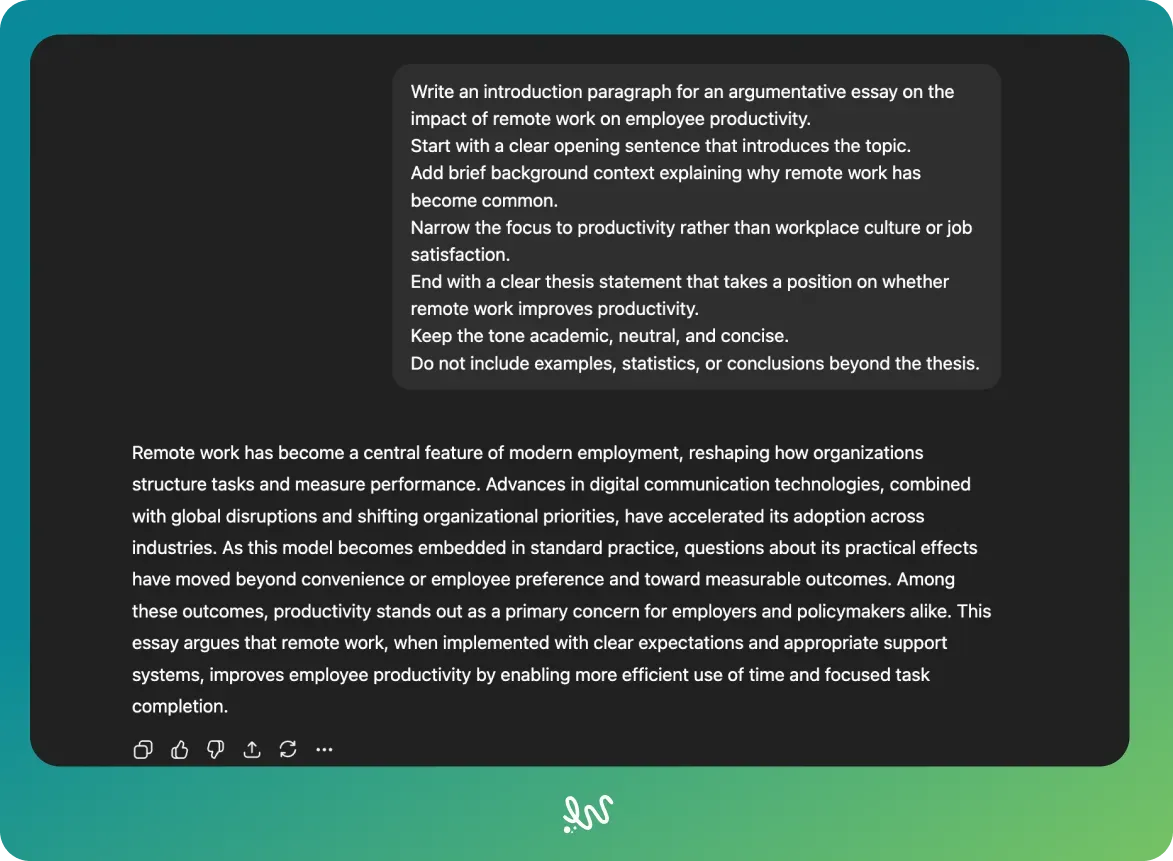
Using AI to Write Your Introduction Paragraph
AI helps most when it’s treated as a drafting tool, not a shortcut. Clear prompts lead to clearer introductions. The goal is structure first, polish later.
- Give the AI a clear topic and purpose: Tell it exactly what the essay is about and what kind of paper you’re writing. Specific instructions prevent vague openings.
- Ask for structure before style: Request an opening sentence, brief context, and a thesis. You can improve wording later once the structure works.
- Keep the focus narrow: Guide the AI toward one clear angle so the introduction doesn’t drift into a broad or unrelated background.
- Use the result as a draft: AI output is a starting point. Edit it so the tone and ideas match your own writing.
If you’re stuck or short on time, ask us to ‘write my article review’ and help shape an introduction that fits your paper from the start.
How to Edit an AI Introduction Before Submitting
Revising an AI-written introduction takes a bit of judgment. The goal is to make sure the ideas are clear, accurate, and actually match the argument your essay ends up making. Here’s what to focus on:
- Align the introduction with your thesis. Make sure the opening clearly leads into your exact argument. AI introductions often sound relevant but drift slightly, so tighten the focus until every sentence supports the central claim.
- Cut vague or padded language. Remove general phrases that sound polished but say little. Replace them with direct, specific wording that clarifies scope and purpose without adding extra length.
- Adjust tone and flow manually. Revise sentence rhythm and transitions so the introduction sounds intentional and human. The goal is a natural academic voice that connects smoothly to the first body paragraph.
The Bottom Line
A good introduction does quiet but important work. It helps the reader understand what the essay is about, why the topic matters, and where the argument is headed. AI can help you get started, especially when you’re stuck or short on time, but the final clarity always comes from shaping the ideas yourself.
If you want extra support getting that opening right, WriteMyEssay can help. Our writers work with your topic and requirements to craft introductions that actually fit the essay, instead of sounding generic or disconnected from the rest of the paper.
FAQ
What Is the Purpose of an Introduction?
The purpose of an introduction is to prepare the reader for the essay. It explains what the topic is, gives just enough background to understand the discussion, and points toward the main idea the essay will develop. A strong introduction helps the reader know what to expect and why the essay is worth reading.
What Are the 5 Parts of an Introduction Paragraph?
An introduction paragraph usually includes an opening sentence, background information, a narrowed focus, a clear thesis statement, and sometimes a brief indication of how the essay will proceed. Together, these parts move the reader from a general topic toward a specific claim that guides the rest of the essay.
How Do You Write a Good Introduction Paragraph?
You write a good introduction by starting with a clear, grounded opening, then adding context that explains the situation around the topic. From there, you narrow the focus and end with a specific thesis. Each sentence should build naturally on the one before it, leading the reader toward the main point.
What Should the First Sentence of an Introduction Paragraph Be?
The first sentence should introduce the topic in a straightforward way and hook the reader. It works best when it refers to a real situation, trend, or idea connected to the essay, without making an argument yet. Its job is to orient the reader, not to persuade them.
How Can AI Help You Write a Strong Introduction Paragraph?
AI can help by generating a clear structure for the introduction, suggesting an opening sentence, or drafting an early version when you’re stuck. It works best when you give it specific instructions and then revise the output yourself to match your voice and the direction of your essay.
Sources
- Northumbria University. (n.d.). Writing introductions and conclusions. Academic Skills Kit. Retrieved from https://www.ncl.ac.uk/academic-skills-kit/writing/academic-writing/writing-introductions-and-conclusions/
- Brandeis University Writing Program. (n.d.). Writing successful introductory paragraphs. Retrieved from https://www.brandeis.edu/writing-program/resources/faculty/handouts/writing-successful-introductory-paragraphs.html
- University of Technology Sydney. (n.d.). How to write an introduction. Retrieved from https://www.uts.edu.au/for-students/current-students/support/helps/self-help-resources/academic-skills/how-write-introduction