
Key Takeaways
- Tone shows the writer’s attitude through word choice and sentence structure.
- Common types of tone in writing include formal, informal, objective, and emotional.
- Tone affects how readers interpret meaning and intent.
- Small wording changes can shift tone quickly.
- Effective writing matches tone to purpose and intended audience.
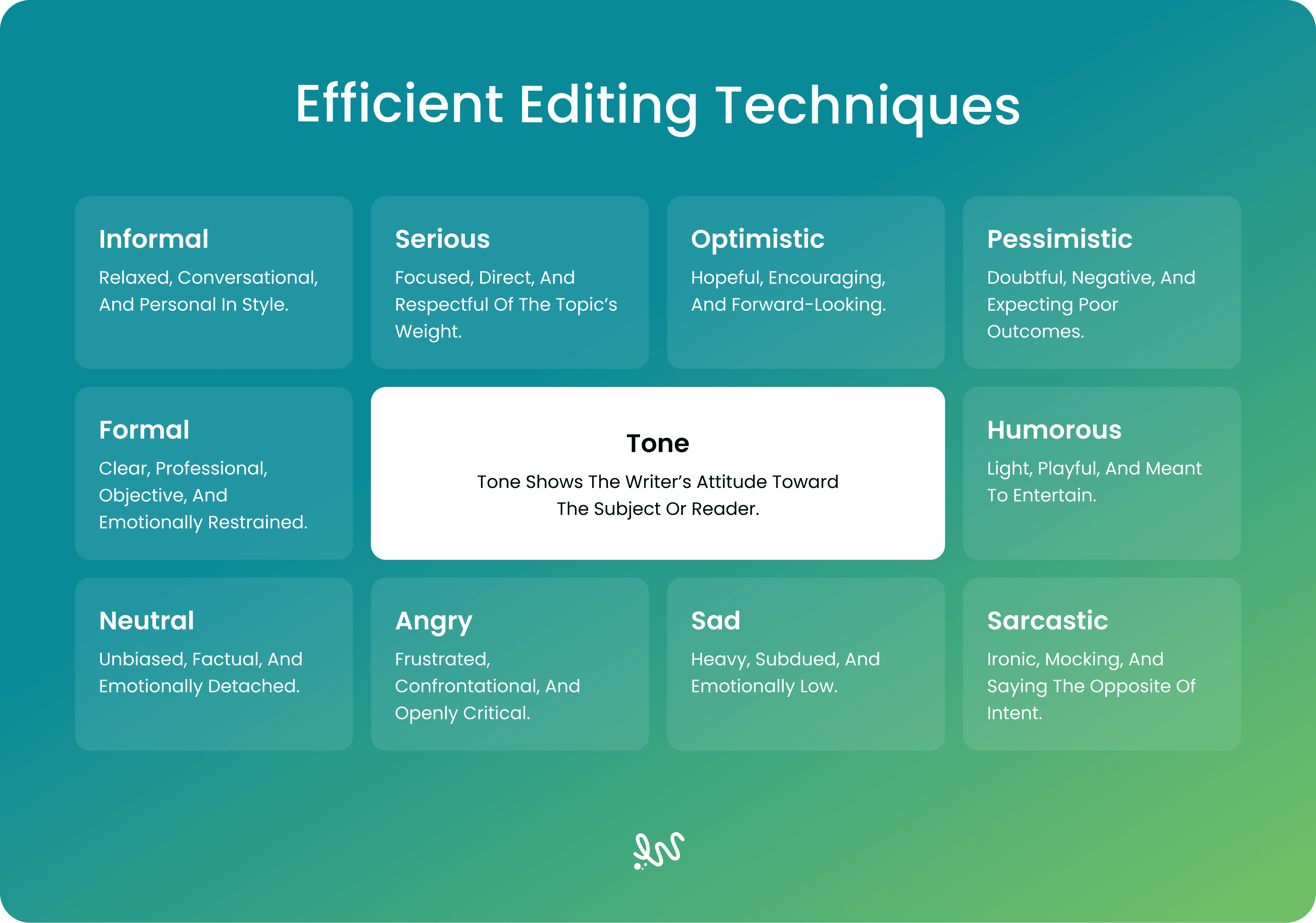
Tone refers to the author’s attitude toward the subject or reader. It comes through word choice, sentence structure, and personal perspective. Tone guides the emotional impact, influences interpretation, and helps readers understand intent beyond the literal words.
In this article, you’ll see how different types of tones in writing work and when to use them. We will also help you see how small choices change meaning, mood, and the reader’s emotional response.
What is Tone in Writing?
The overall tone in writing is the writer’s attitude toward the subject or the reader. It’s the difference between sounding careful, confident, sarcastic, or warm, even when you’re talking about the same idea. Word choice and sentence shape do most of the work. Compare 'The data suggests a trend' with 'The numbers make the pattern hard to miss.' Same point, but very different feeling.
Writer tip: Read one paragraph out loud as if you’re explaining it to a real person. Anywhere your voice flattens or sounds fake, rewrite that sentence using simpler words and a stronger verb.
Make Your Writing Sound Right

What are 21 Common Tones in Writing?
In the following sections, we’ll focus on the different types of tones in writing and group them by the general approach a writer takes toward the subject and the reader.
1. Formal
A formal tone uses standardized language and avoids personal presence. Sentences appear in third-person perspective, contractions and slang are excluded, and vocabulary stays precise and objective. Emotional intensifiers and conversational fillers are removed. The wording favors clarity and verifiable statements over opinion. You see this tone in business writing, academic papers, and official reports, where trust depends on restraint.
- 'The results reveal a consistent relationship between sleep duration and academic performance.'
- ‘Extended sleep duration correlates with higher attention scores across testing sessions.’
- ‘Participants who slept fewer than six hours demonstrated reduced task accuracy during assessment.’
2. Informal
An informal tone uses first- or second-person voice and allows the writer to appear in the text. Contractions are common, vocabulary may include everyday wording or mild slang, and sentences follow natural speech patterns rather than strict structure. The language accepts opinion, direct address, and simple explanations. This tone appears in blogs, personal essays, and reader-focused guides.
- 'Skimping on sleep tanks your focus in no time, and boom - your grades take a nosedive right after.'
- ‘If you stay up scrolling again, you will struggle to concentrate tomorrow.’
- ‘You can fix this fast - go to bed earlier tonight and see the difference.’
3. Pessimistic
A pessimistic tone is characterized by language that feels heavy, skeptical, or resigned, often highlighting limitations rather than possibilities. While using it, writers signal criticism, frustration, or a belief that outcomes will most likely disappoint. Among the types of tone in writing examples, this one prepares the reader for unfavorable outcomes.
- 'No matter how often sleep habits are discussed, most people will keep ignoring them and pay the price later.'
- ‘Even with clear evidence, the same mistakes will continue, and the results will not improve.’
- ‘Short-term effort rarely lasts, and the routine will likely collapse within days.’
4. Optimistic
An optimistic tone presents the problems while keeping the door open to improvement. This example of tone stays grounded in reality but points the reader toward practical change instead of failure. The language focuses on what can realistically get better, separating it from a pessimistic tone that assumes nothing will.
- 'Even tiny tweaks to your sleep, like slipping into bed a bit earlier a couple nights a week, can spark a real boost in focus and vitality, opening doors to sharper days ahead.'
- ‘A small shift in bedtime can steadily improve concentration over the next week.’
- ‘Consistent sleep habits usually lead to clearer thinking and better daily energy.’
If you need help with transition words for first body paragraph, this guide offers lists and examples you can use to connect your ideas smoothly.
5. Joyful
This approach sounds genuinely upbeat, as if the writer is enjoying the moment they’re describing. The language centers on positive feelings and easy momentum, helping the reader feel lifted rather than instructed. Among the types of tone used in writing, this one creates warmth and lightness without forcing enthusiasm.
- 'After a glorious night of deep sleep, mornings sparkle with lightness, focus snaps into place like magic, and the whole day flows with effortless, exhilarating ease!'
- ‘A full night of sleep makes the morning feel bright, and every task feels lighter to start.’
- ‘Energy returns quickly, and the day moves forward with a steady, cheerful rhythm.’
6. Sad
The words pull the reader into a gentle drag, allowing the heaviness of the moment to sink in, far from any rush toward fixes. Writers turn to it to face loss or burnout head-on, with raw honesty that doesn't flinch.
- 'Sleepless nights weigh down mornings, scattering focus and turning simple tasks into quiet struggles.'
- ‘Another restless night leaves the day slow and difficult to move through.’
- ‘Fatigue settles in early, and even routine work feels heavy and distant.’
7. Sarcastic
A sarcastic tone says one thing while clearly meaning another. The wording sounds polite or neutral on the surface, but the intent carries mockery, disbelief, or frustration. Writers use it to criticize indirectly, letting contrast do the work instead of an open accusation.
- 'Oh yes, because slashing your sleep once more is totally the secret to crushing productivity tomorrow - genius move, right?'
- ‘Right, skipping sleep again will obviously turn you into a productivity machine tomorrow, brilliant strategy, really.’
- ‘Of course, another night awake is exactly what your concentration needs to perform all day perfectly, flawless thinking there, right?’
8. Angry
A bitter or angry tone focuses on open frustration and lingering resentment. The language feels sharp, impatient, and done with excuses. Writers use this style when they want the reader to feel the pressure of repeated failure, neglect, or unfairness. In the range of types of writing tones, this one ensures the discontent hits hard and clear.
- 'After months of stubbornly ignoring that sleep advice, the same old problems keep dragging you down, and acting all shocked just makes everything worse.'
- ‘You keep pushing sleep aside every night, then act surprised when your concentration fails and the same mistakes repeat all day.’
- ‘The warnings have been clear for weeks, yet you ignore them and complain about exhaustion as if the outcome were unpredictable.’
9. Somber
A serious or somber expression is calm and controlled while addressing weighty subjects. The words stay measured, stripped of flourish, because the subject matter refuses decoration. Humor would fracture the moment. Sentimentality would blur the line between genuine concern and performance. Instead, the writer steps back, lets the weight of the issue speak for itself.
- 'The quiet toll of chronic sleep deprivation mounts steadily, heightening health risks that whisper of long-term shadows, demanding steady vigilance rather than fleeting worry.'
- ‘Prolonged sleep deprivation gradually erodes attention and judgment, increasing risks that accumulate over time.’
- ‘The effects appear slowly, yet their impact remains lasting, requiring consistent care rather than brief concern.’
If you want hands-on help applying these ideas, a ‘write my essay service’ can help you adjust tone, clarity, and structure so your own writing matches its purpose and different audiences.
10. Witty
A witty expression uses comedy. The language highlights everyday contradictions, exaggerates small failures, or points out irony to make a clear point while keeping the reader relaxed. It still delivers information, but it does so by making the reader smile first, then think.
- 'Sacrificing sleep for productivity may seem like a clever shortcut. Yet before long, you sit frozen at the screen, questioning if the text has woven an inscrutable puzzle or if your thoughts have wandered off on an uninvited holiday.'
- ‘Cutting sleep sounds like a strategic investment in productivity. Soon you stare at a basic paragraph, reread it six times, and begin to suspect the keyboard is producing literature meant for a far more educated species.’
- ‘You promise yourself extra progress by staying awake a little longer. By morning you analyze a simple message with academic seriousness and briefly wonder whether commas have always carried this much emotional weight.’
11. Whimsical
A playful or whimsical expression adds imagination and charm to the message. The language is creative, sometimes exaggerated, and open to curiosity. It uses gentle humor or unexpected imagery. Writers use this approach to make ideas feel fun and engaging without needing to be serious or instructional.
- 'After a full night's slumber, the brain stirs awake as if sprinkled with stardust, whispering secrets of midnight adventures, and ready to chase rainbows through the day's delights.'
- ‘After proper sleep, thoughts wander out like curious cats, poking at ideas, batting around plans, and settling comfortably wherever imagination finds sunlight.’
- ‘With enough rest, the mind opens its windows wide, lets fresh ideas drift inside, and spends the day rearranging them like cheerful furniture.’
12. Assertive
This tone speaks with certainty and leaves little space for debate. The language is direct, firm, and intentional, making expectations or conclusions clear right away. Writers rely on it when guidance needs to be taken seriously or followed without negotiation. This type of tones in writing emphasizes confidence and control.
- 'Adequate sleep is essential for sustained focus, and ignoring it will continue to harm performance.'
- ‘Consistent sleep schedules improve concentration, and breaking them directly reduces daily performance.’
- ‘You need at least seven hours of sleep to maintain reliable attention throughout the day.’
12. Aggressive
An aggressive expression is hard and confrontational. The language sounds irritated and impatient, often calling out mistakes directly instead of softening them. Writers use this tone when they want to provoke, pressure, or express outright anger, even if it risks pushing the reader away.
- 'Stop pretending sleep doesn’t matter. The damage is obvious, and you keep choosing to ignore it.'
- ‘You cut your sleep every night and then blame everything else when your work falls apart.’
- ‘Quit acting confused about your exhaustion, you created this problem and you keep repeating it.’
13. Urgent
A tense or urgent expression creates pressure and signals that action cannot wait. The language feels tight and focused, pushing the reader to pay attention now rather than later. Writers use this tone when delays carry real consequences or when the situation is actively unfolding.
- 'If sleep continues to be pushed aside this week, concentration will drop further, and mistakes will multiply fast.'
- ‘Fix your sleep schedule tonight or tomorrow’s work will suffer immediately.’
- ‘Act now because another late night will noticeably reduce your focus in the morning.’
14. Direct
A direct expression says exactly what needs to be said. The language is plain, clear, and unapologetically honest, even when the point may feel uncomfortable. Writers use this tone to cut through confusion and get straight to the reality of a situation.
- 'If you keep cutting sleep, your focus will keep dropping. There is no workaround for that.'
- ‘You are tired because you sleep too little. Fix the schedule and the problem improves.’
- ‘Poor concentration comes from lack of rest. More sleep leads to better performance.’
If you want help with your annotated bibliography writing, our authors can assist you in crafting detailed annotations.
16. Inspirational
An encouraging or inspirational expression supports the reader while nudging them forward. The language reassures without ignoring effort, focusing on growth, progress, and capability. Writers use this tone to build confidence and help the reader believe change is possible.
- 'You don’t need perfect sleep to start seeing results - steady improvements are enough to move you forward.'
- ‘Small changes today can strengthen your focus tomorrow, and each better night builds real progress.’
- ‘Stay consistent with your routine and improvement will follow, even if the steps feel modest at first.’
17. Objective
An objective expression stays neutral and grounded in observable facts. The language avoids personal judgment and emotion, focusing on what can be measured, verified, or clearly shown. Writers use this tone when accuracy matters more than persuasion, especially in reports, research, or analysis.
- 'Participants who slept fewer than six hours showed lower attention scores during testing.'
- ‘Average reaction times increased after two consecutive nights of reduced sleep.’
- ‘Error rates rose in tasks completed following less than seven hours of rest.’
18. Subjective
A subjective expression reflects personal experience and opinion. The language carries emotion, interpretation, and individual perspective rather than neutral observation. Writers use this tone when sharing impressions, reactions, or personal viewpoints that cannot be separated from feeling.
- 'After another short night of sleep, everything felt harder, slower, and more frustrating than usual.'
- ‘I felt unusually unfocused all day, and even simple tasks seemed irritating to finish.’
- ‘To me, mornings after little sleep feel dull and heavy, as if the day never fully starts.’
19. Nostalgic
A nostalgic expression drifts backward, measuring the present against memories that feel softer and slower. The language carries affection for what once was, along with the quiet awareness that it’s gone. Writers use this tone to let memory do the emotional work.
- 'I remember when falling asleep came easily, and mornings started without the weight they seem to carry now.'
- ‘I used to wake up rested without effort, back when nights felt longer and mornings felt kind.’
- ‘There was a time when sleep arrived quietly, and the day began gently instead of in a rush.’
20. Curious
A curious tone stays alert and slightly unfinished. It doesn’t rush to explain or conclude. Instead, it pauses, looks closer, and invites the reader to wonder alongside the writer. The language feels open-ended, signaling that learning is still in progress.
- 'What actually happens to focus and mood when sleep stops being optional and starts being consistent?'
- ‘Does concentration improve gradually with regular sleep, or does it change suddenly after a certain point?’
- ‘What differences appear in daily mood once a stable sleep routine holds for several weeks?’
21. Cooperative
A cooperative tone moves the focus from "me" to "us," drawing people into teamwork. The words feel welcoming and straightforward, building progress by working together instead of giving orders. It's the style that fits when results come from everyone's input, not just one person's control.
- 'If we treat sleep as a shared priority, we can build routines that hold up beyond a single good week.'
- ‘Let’s set a consistent bedtime together so we can support each other in keeping the routine.’
- ‘If we track our sleep habits as a group, we can notice patterns and improve them collectively.’
If you need guidance on college essay format, our article gives structure tips you can follow to organize your introduction, body paragraphs, conclusion, and citations.
How to Use Tone in Your Writing
Here’s how to control meaning across the types of tones used in writing.
- Word choice (diction): Single words do more work than people realize. 'Tired' sounds mild while 'Drained' sounds heavier. 'Concerned' stays calm, while 'Alarmed' raises tension. Tone becomes clearer when your words match the emotional level you’re aiming for.
- Sentence structure: Short sentences land fast and feel direct. Long sentences slow the reader and feel more careful or reflective. Neither is better on its own. Switching between these writing techniques lets you control pace and emphasis.
- Punctuation choices: Punctuation shapes attitude. A period closes a thought, a question mark invites uncertainty or curiosity. Too many exclamation points can feel strained or irritated.
- Verb strength: Verb choice can shift tone quickly. 'Says' feels neutral, while 'Argues' adds firmness, and 'Insists' raises intensity. When revising, try swapping verbs before rewriting full sentences.
- Audience awareness: Tone depends on who’s reading. What feels natural for classmates may sound careless in an academic setting or stiff in a blog. Adjust emotional distance based on the reader.
Writer tip: After drafting, write one sentence that names your intended tone, then reread each line and remove anything that doesn’t support it.
Improve the Tone of Your Essay
Mastering Tone Through Practice
The exercises in the PDF that follows are designed to train your ear for tone by working with real sentences for free. Answers are provided at the end of the file so you can check your thinking and see why each tone fits.
Wrapping It Up
Tone shapes how your writing feels, not just what it says. Word choice, sentence structure, and pacing work together to guide the reader’s response. Once you learn to control those elements, tone stops being guesswork. Put that control into practice with the exercises and test how small changes shift meaning.
FAQ
What Types of Tones Are There in Writing?
Different tones in writing include formal, informal, optimistic, pessimistic, humorous, serious, and reflective. Writers choose a tone based on purpose, context, and audience. An academic paper usually stays formal and neutral, while a blog post may sound conversational or playful. Creative writing often shifts tone to shape mood and emotion.
How Do You Identify Tone in Writing?
You identify tone by looking at word choice, sentence structure, and emotional cues. Read the text out loud and notice how it feels. Does it sound calm, tense, sarcastic, or encouraging?
How to Choose a Type of Tone in Writing?
Choosing a tone starts with the goal of the text. Decide what reaction you want from the reader and who you are writing for. Informational writing usually needs clarity and restraint, while persuasive or personal writing allows more emotion. The tone should fit the situation, not the writer’s mood.
How Many Types of Tone in Writing Are There?
There is no fixed number. Tone is not a closed list but a range. Many pieces of writing blend more than one tone, and writers often adjust tone slightly to guide emphasis or signal a shift in focus.
Why Is Tone in Writing Important?
Tone affects how a message is received. The same information can feel helpful, harsh, or dismissive depending on tone. Clear tone builds trust, keeps the reader engaged, and helps complex ideas land as intended.
Sources
- Thompson Rivers University. (n.d.). Academic tone for formal writing (PDF). TRU Writing Centre. https://www.tru.ca/__shared/assets/Academic_Tone57568.pdf
- Wheaton College Writing Center. (n.d.). Style, diction, tone, and voice. Wheaton College. https://www.wheaton.edu/academics/services/writing-center/writing-resources/style-diction-tone-and-voice
- University of Maryland Global Campus Writing Center. (n.d.). A word about style, voice, and tone. UMGC. https://www.umgc.edu/current-students/learning-resources/writing-center/online-guide-to-writing/tutorial/chapter3/ch3-21