Key Takeaways
- Over 55% of university students report high emotional exhaustion linked to academic demands in recent surveys.
- Around 40% of students say fatigue has already affected their academic performance.
- In some lower-income regions surveyed, reported study-related exhaustion exceeds 80%.
- Nearly 70% of high school students report insufficient sleep, rising above 80% by senior year.
- Only about one-third of students report feeling truly 'flourishing' in 2025.
- More than half of students continue to report significant loneliness despite improvements in crisis-level mental health.
Study fatigue describes a lasting state of physical and mental exhaustion that builds through sustained academic pressure. A full night of sleep often fails to reset energy, and the strain tends to carry forward into the next day. Recent data and broader learning statistics show the scale of the issue clearly: over 55% of college students report burnout, while nearly 40% of teenagers say they feel tired most of the time.
WriteMyEssay brings guided academic support into one place, addressing the growing academic stress consistently highlighted in study fatigue statistics.
Real Writers. Real Relief.

What Is Study Fatigue?
Study fatigue is a chronic state of mental and physical exhaustion caused by sustained academic pressure. Here’s a list of study fatigue symptoms:
- Constant tiredness: Energy does not fully return after sleep. Mornings start heavy, and academic fatigue follows throughout the day.
- Mental slowdown: Focus slips more quickly than before. Reading takes longer, instructions blur together, and information is harder to retain.
- Eroding motivation: Tasks that once felt manageable begin to feel draining. Effort increases while results feel smaller.
- Emotional wear: Frustration builds, followed by cynicism and a quiet sense of detachment from coursework.
- Long duration: This state does not pass in a few days. Weeks or months can go by before relief appears without intervention.
Normal tiredness, fatigue, and burnout are often used interchangeably, but they describe different states:
- Normal tiredness fades after rest.
- Fatigue lingers as ongoing mental exhaustion and declining physical health.
- Burnout is the most severe form, marked by deep exhaustion, emotional detachment, and lost motivation.
Global Prevalence of Study Fatigue
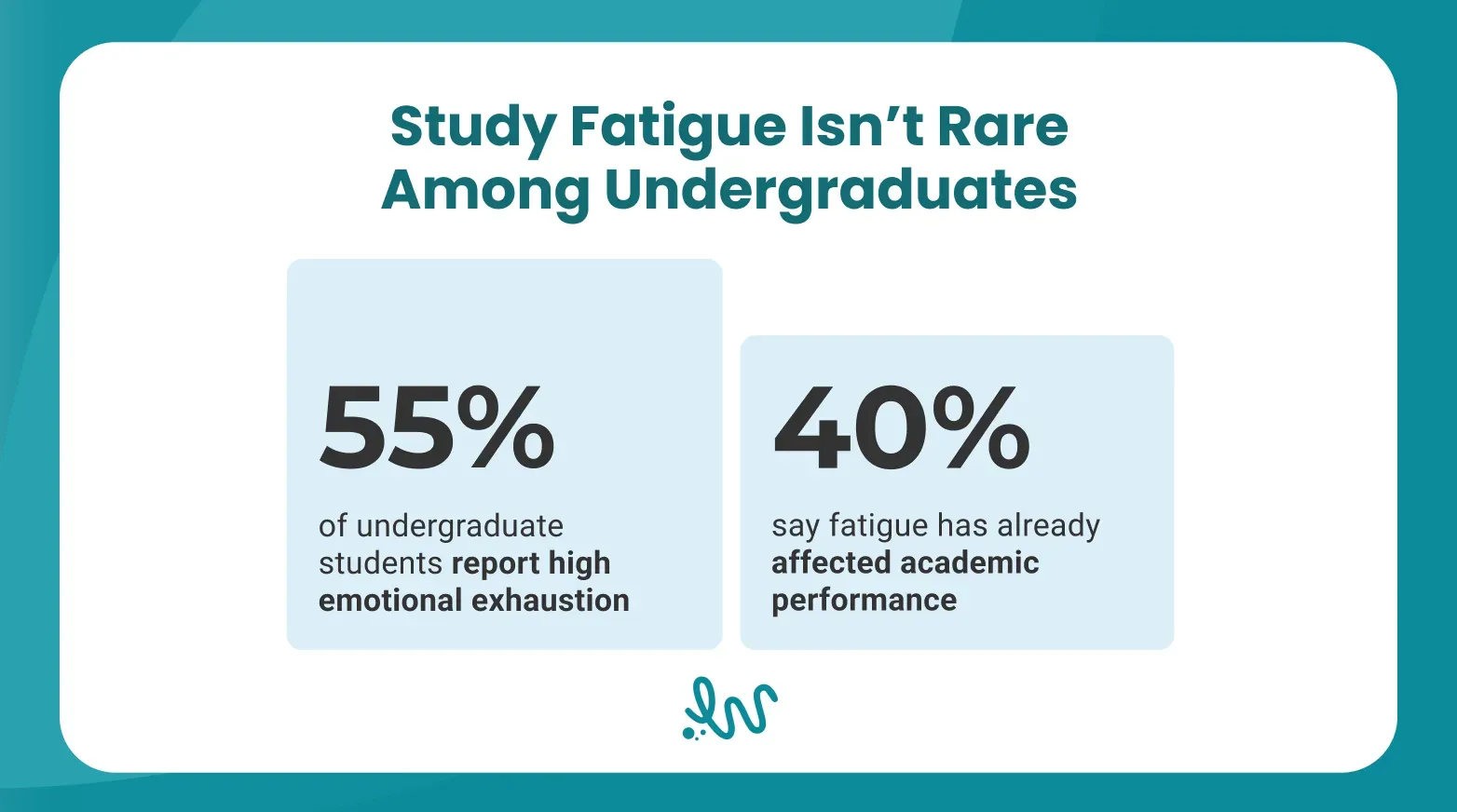
Study-related exhaustion shows up almost everywhere researchers look. Across international surveys, more than 55% of undergraduate students report high emotional exhaustion, and about 40% say their academic performance has suffered because of it. In lower-income regions, where academic pressure often overlaps with financial stress, reported exhaustion can rise above 80%, showing how uneven the burden can be.
The pattern starts early. In the United States, nearly 70% of high school students report not getting enough sleep, and by the final years of high school, that number climbs past 80%. Similar trends appear in other exam-heavy education systems, where long hours and constant evaluation leave little room for recovery.
By college, academic fatigue becomes the norm rather than the exception. More than half of undergraduates report ongoing stress and exhaustion, with the highest rates seen in medical, engineering, and law programs, where burnout often reaches 65 to 70%. Across countries and age groups, the numbers tell the same story. Study-related exhaustion is widespread, persistent, and built into the way modern education operates.
Study Fatigue Across Education Stages
Study fatigue becomes more intense as academic demands rise. In K–12 education, the earliest signs appear through widespread sleep loss. At the college level, burnout grows as academic pressure overlaps with financial and social stress. In high-intensity fields such as medicine and STEM, exhaustion reaches its highest levels, turning fatigue into a defining part of the academic experience.
K-12 (Middle & High School)
College admissions pressure has changed the rhythm of school days for many students. Homework is no longer just a way to practice skills. It has become a signal of ambition, and that shift carries consequences. When time runs out, sleep is usually what gets cut because it feels flexible.
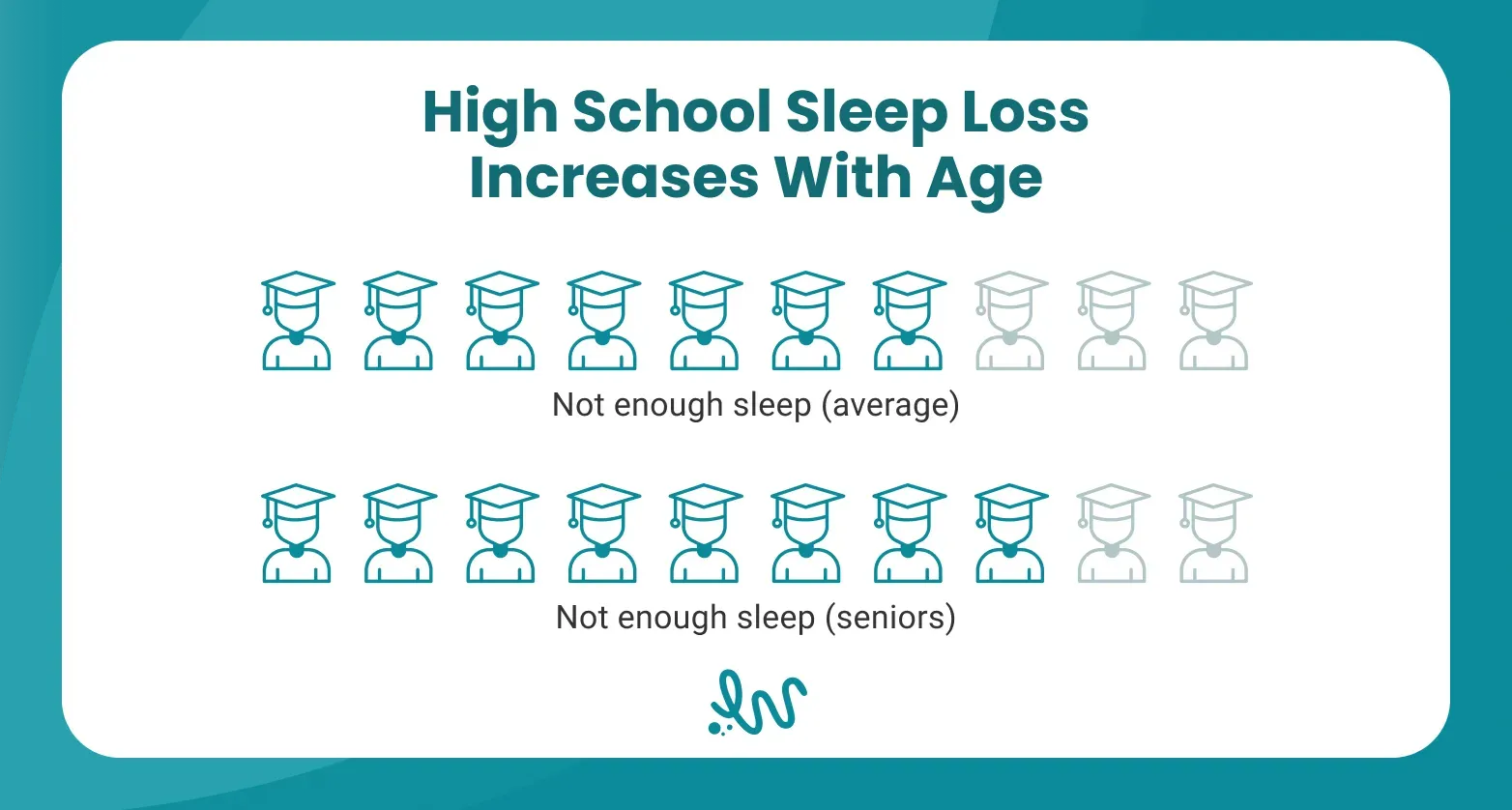
Teenagers are supposed to get 8–10 hours of sleep a night, yet most fall far short. Around 70% of high school students report not getting enough sleep, and by senior year, that number climbs past 80%. The pattern now shows up earlier, too, especially in middle school students placed in advanced tracks where homework regularly stretches into late evenings.
Once sleep slips, everything else gets harder. Tired students take longer to focus, assignments drag on, and nights get even shorter. After a while, exhaustion stops feeling unusual. What began as preparation for college turns into a routine cycle of homework fatigue and poor sleep.
The pressure does not exist in isolation either, as overlapping stressors documented in school bullying statistics show how academic demands often combine with social strain during middle and high school years.
Higher Education & College
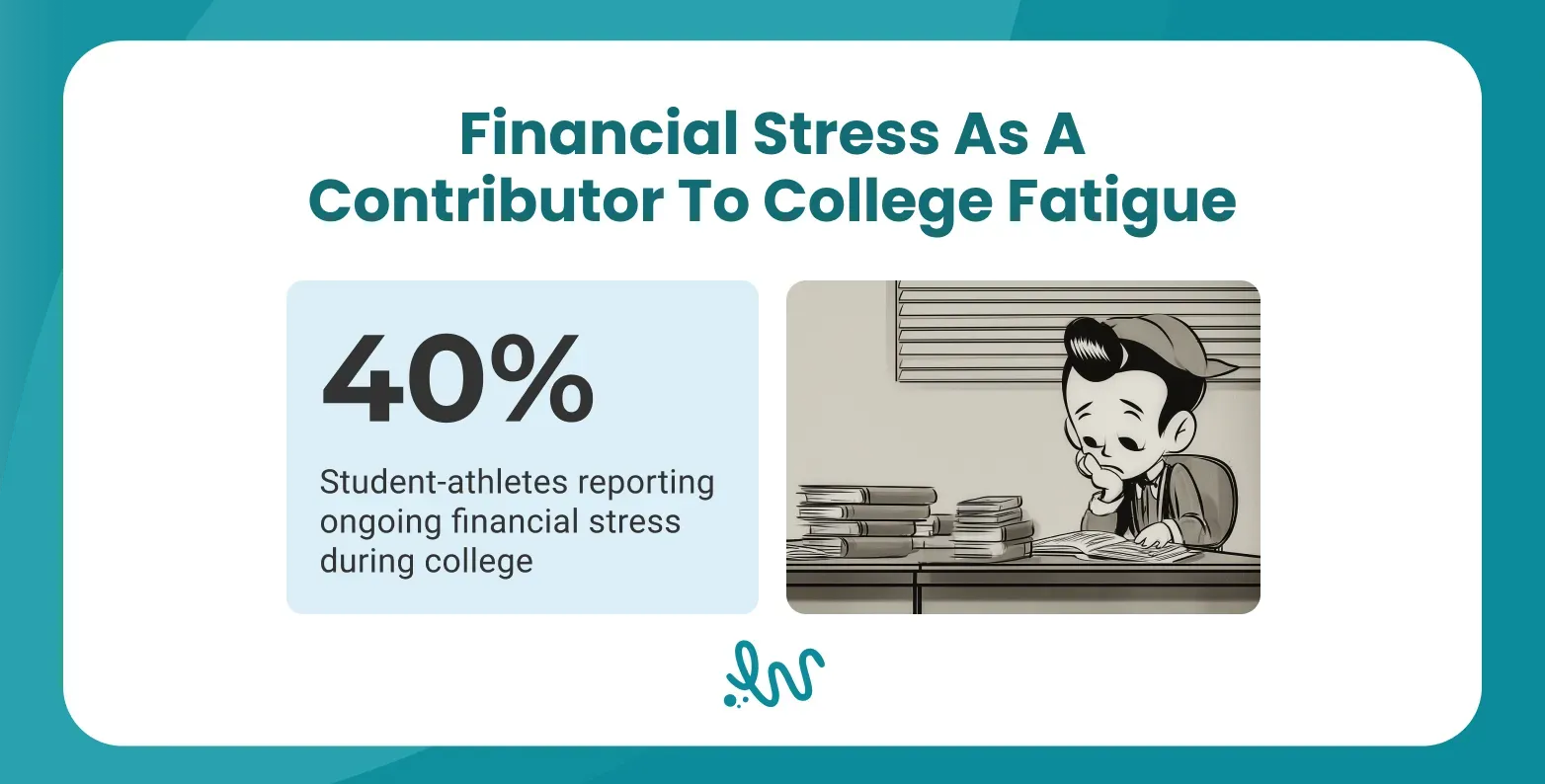
The move into university life brings a kind of exhaustion many students are not prepared for. Structure fades, expectations multiply, and academics suddenly share space with financial worries and social pressure.
Money adds weight quickly. Nearly 40% of student-athletes reported ongoing financial stress, despite scholarships or institutional support. For many, classes are balanced alongside jobs, performance demands, and anxiety about future stability. Rest becomes harder to protect. Social pressure compounds things, especially early on, when friendships, routines, and identity are still being rebuilt.
The strain does not land evenly. Female students consistently reported higher levels of mental exhaustion and emotional stress than male students under similar workloads. Fatigue showed up sooner and felt heavier, while men were more likely to minimize stress until it affected performance. Together, the data suggest that university exhaustion grows out of overlapping pressures, shaped by transition, finances, and gendered expectations rather than workload alone.
As graduation approaches, the stress intensifies around future planning, and the pressure to write personal statements on time becomes another source of sustained mental load.
Academic Fields With the Highest Burnout Levels
Study fatigue does not hit all majors the same way. Some programs push students harder and for longer, and the difference shows up clearly in burnout data.
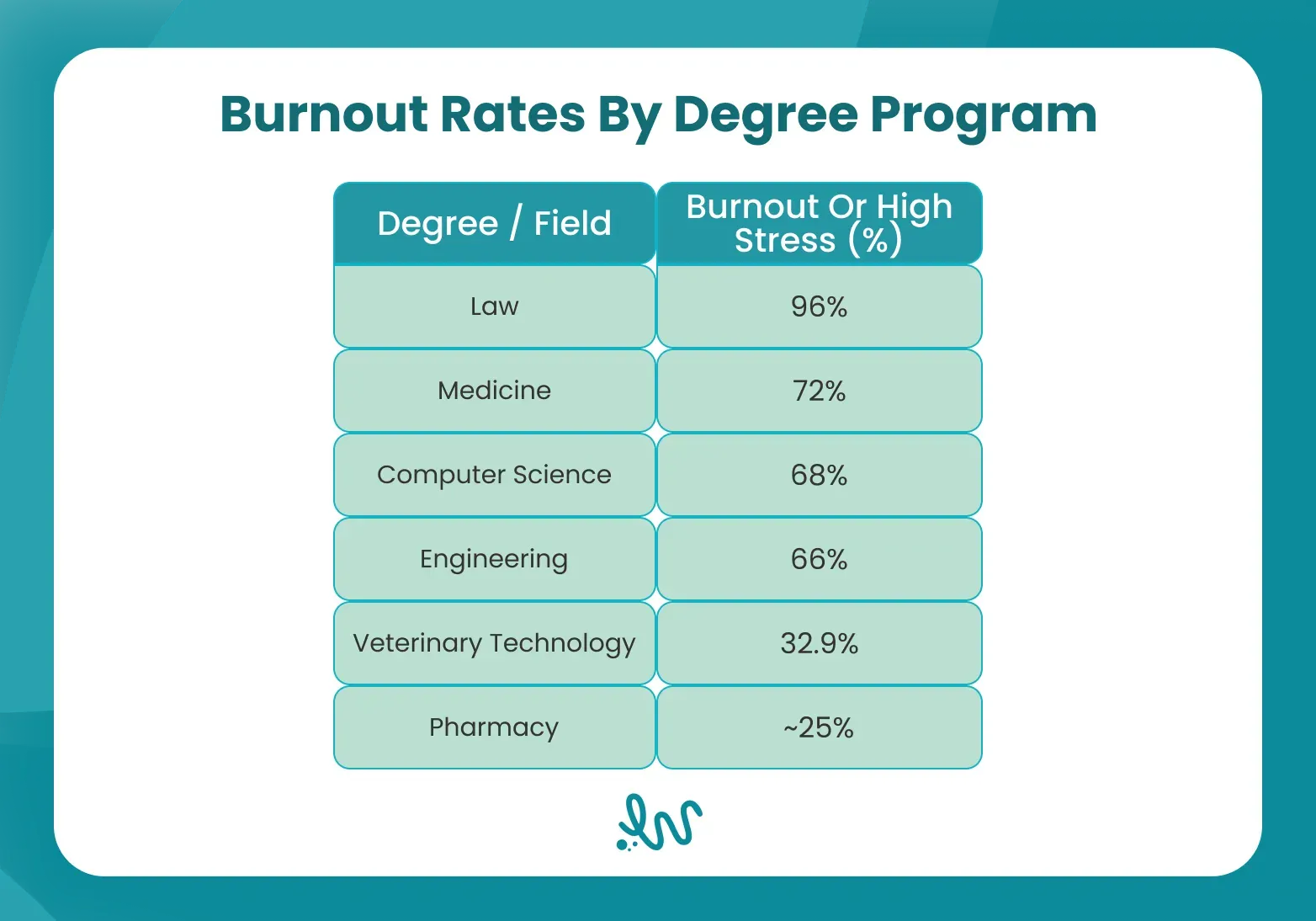
Medical education sits at the top of the risk factors list. Nearly 72% of medical students already meet burnout thresholds by the end of their first semester. Prevalence of fatigue shows up early and escalates fast, long before training is complete. STEM fields follow a similar path, though the climb is slower. Engineering and computer science students face long screen hours, dense material, and constant problem-solving.
Gender patterns appear across these high-pressure tracks. Women report higher emotional and study-related exhaustion than men under comparable demands, suggesting that pressure is experienced and carried differently, not simply worked through.
Across disciplines, one pattern holds. Where intensity stays high and downtime stays limited, exhaustion becomes part of the academic experience rather than a temporary phase.
Digital Exhaustion: When Learning Stays on Screens
As more coursework moves online, a different kind of study fatigue has emerged. Digital exhaustion comes from spending long hours reading, listening, and responding through screens with very few natural breaks. Digital textbooks, recorded lectures, and online platforms keep attention locked in place longer than in-person classes ever did.
The scale matters. Over 60% of undergraduates now take at least one online course, which means screens dominate a large share of daily studying. Research on online learners shows that higher mental fatigue is closely linked to lower expected academic performance, suggesting this exhaustion affects learning directly, not just mood.
Video-based learning adds to the strain. Long calls require constant focus and self-monitoring, especially in large groups. When study time stays screen-bound for hours at a stretch, mental energy drains faster and recovery takes longer. Digital exhaustion has become a quiet but persistent part of modern student life.
The Physical and Emotional Effects of Study Fatigue
Study fatigue tends to surface in everyday ways that students often brush off at first. Over time, those small signals add up and start affecting both physical and mental health issues.
- Energy stays low even after a full night of sleep
- Headaches and eye strain become routine, especially after long study sessions
- Shoulders, neck, and jaw stay tense without much relief
- Sleep turns restless or inconsistent, making mornings harder
- Minor illnesses show up more often than they used to
- Focus fades faster, and studying takes longer
- Anxiety creeps in, even around familiar tasks
- Motivation weakens, and emotional numbness replaces interest
- Irritability increases, while patience runs thin
- Burnout and depressive symptoms become more likely over time
Gaps in Student Well-Being
By 2025, the numbers suggest that fewer students report severe depression or anxiety than a few years ago, and crisis-level distress has eased. On paper, that feels like a win.
In everyday life, though, many students tell a different story. Only about one in three say they feel genuinely well or fulfilled. Most are doing what they need to do like going to class, turning in work, keeping up, but without much excitement or direction. Life feels manageable, not meaningful.
A few pressures keep that feeling in place. Loneliness still affects more than half of students, even on busy campuses. Money stress sits in the background for many, shaping choices and draining energy. Add uncertainty about jobs and the future, and motivation narrows to getting through the next week.
That’s the gap in 2025. Students are holding it together more often than before, but a sense of purpose hasn’t caught up yet. They’re surviving, mostly fine on the surface, while thriving remains just out of reach.
Academic Support, Handled by Humans
The Final Words
Study fatigue has become a shared experience rather than an individual struggle. Across age groups, countries, and disciplines, the same patterns keep appearing: persistent exhaustion, reduced focus, emotional strain, and a growing sense of disconnection. While recent data shows fewer students in crisis, many are still operating in survival mode, managing workloads without feeling energized, optimistic, or purposeful. Digital learning, competitive academic tracks, financial pressure, and long-term uncertainty have all reshaped what 'normal' student life looks like.
When deadlines pile up and energy runs low, WriteMyEssay can offer practical relief. You can simply ask, ‘write my papers’, and we’ll give you back time to rest, reset, and protect your well-being while staying on track academically.
FAQ
How Common Is Study Fatigue Among Students?
Study fatigue is widespread. Surveys across schools and universities consistently show that more than half of students report ongoing exhaustion, with many describing fatigue as a normal part of their academic routine rather than an occasional phase.
What Are the Symptoms of Study Fatigue?
Study fatigue often shows up as constant tiredness that does not improve with sleep, difficulty concentrating, slower learning, headaches, eye strain, irritability, low motivation, and emotional detachment from coursework.
Who Is Most Likely to Experience Study Fatigue?
Students in high-pressure environments and with low levels of physical activity are affected the most. This includes medical and STEM students, student-athletes, and those balancing academics with work or financial stress. Older high school students and undergraduates report especially high levels of fatigue.
What Factors Contribute Most to Study Fatigue?
Study fatigue is driven by sustained academic pressure, heavy workloads, long screen time, insufficient sleep quality, financial stress, and limited recovery time. Competitive education systems and constant evaluation make exhaustion harder to avoid.
How Does Online Learning Affect Study Fatigue?
Online learning often increases study fatigue by keeping students mentally engaged for longer periods without natural breaks. Screen-heavy coursework, digital textbooks, recorded lectures, and long video sessions increase cognitive load and reduce natural breaks, contributing to mental exhaustion and faster burnout.
Sources
- American Psychological Association. (n.d.). School start times. https://www.apa.org/topics/children/school-start-times
- Higher Ed Dive. (2023). Survey: Over 4 in 5 college seniors report burnout during undergraduate experience. https://www.highereddive.com/news/survey-over-4-in-5-college-seniors-report-burnout-during-undergraduate-exp/692208/
- National Collegiate Athletic Association. (2020). NCAA student-athlete well-being study. https://www.ncaa.org/what-we-do/research/studies/
- Stanford Lifestyle Medicine. (n.d.). Sleep and academic excellence: A deeper look. https://lifestylemedicine.stanford.edu/sleep-and-academic-excellence-a-deeper-look/
- Vella, E. J., & Pai, N. (2024). Burnout prevalence and associated factors among university students. Medicina, 60(4), 575. https://www.mdpi.com/1648-9144/60/4/575
- Zhang, Y., et al. (2024). Prevalence of excessive daytime sleepiness among students and associated factors. Frontiers in Public Health. https://pmc.ncbi.nlm.nih.gov/articles/PMC11973388/